
Colombian RUT for Digital Nomads 2026: Your Essential Tax ID Guide for Foreigners
Colombia’s allure as a destination for digital nomads is undeniable. With its vibrant culture, stunning landscapes, and an increasingly appealing cost of living, the country is a magnet for remote workers seeking a new adventure. In fact, the number of American workers identifying as digital nomads has seen a dramatic surge, marking a 153% increase since 2019. This growing trend has prompted governments worldwide, including Colombia’s, to adapt. The Colombian government itself aimed to attract at least 45,000 digital nomads by mid-2024, highlighting its commitment to this demographic. For these global citizens, understanding the local administrative landscape is paramount to a smooth and compliant stay. Central to this is the “Registro Único Tributario” (RUT), Colombia’s tax identification number. This guide, specifically tailored for 2026, will demystify the RUT for foreigners, outlining its importance, how to obtain it, and how it facilitates your life and work in this captivating country.


Related Topics of Interest for You:


Colombia’s Growing Appeal for Foreigners and Digital Nomads
Colombia: A digital nomad hotspot by numbers
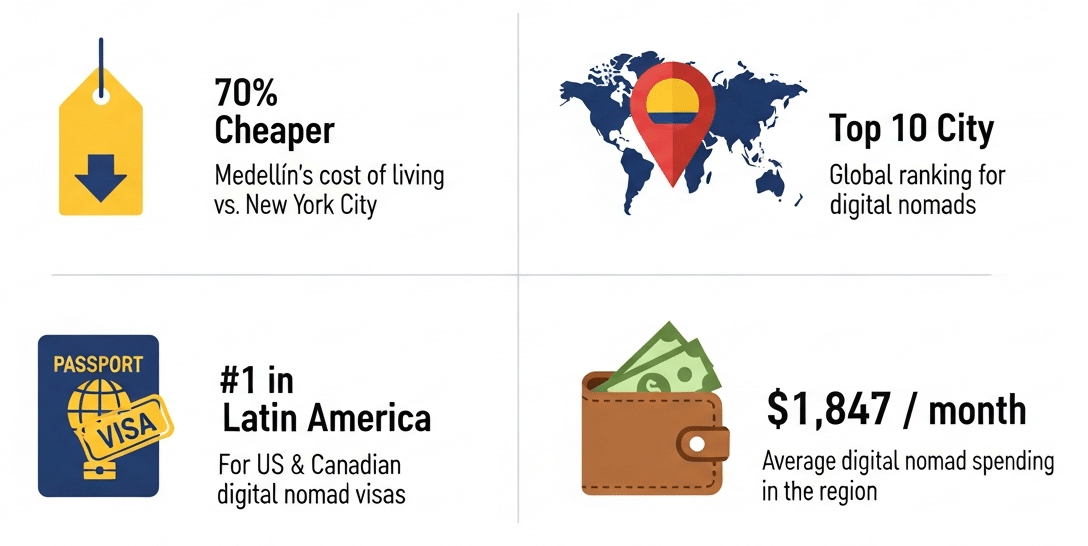
Key statistics highlighting Colombia’s appeal to the global remote workforce.
Colombia has firmly established itself as a prime destination for individuals seeking to blend work and travel. Cities like Medellín are consistently recognized among the top 10 cities worldwide favored by digital nomads, offering a compelling mix of affordability and modern amenities. Living in Medellín, for instance, is approximately 70% cheaper than in New York City, making it an attractive option for those looking to maximize their income. Furthermore, Colombia was ranked as the top Latin American country for digital nomad visas for Canadian and US citizens in 2024, underscoring its welcoming policies. This growing popularity isn’t just about lifestyle; it’s also about economic integration. Digital nomads spend an average of $1,847 per month in Latin America, contributing significantly to the local economy. As the number of remote workers choosing this vibrant country continues to rise, understanding the fundamental administrative tools, like the RUT, becomes an essential part of the nomadic experience.

Why This 2026 Guide is Crucial for You
As we look ahead to 2026, the landscape for digital nomads in Colombia continues to evolve. While the country has made significant strides in welcoming foreigners with initiatives like the dedicated digital nomad visa, which requires applicants to demonstrate a minimum monthly income of approximately $775 USD, navigating the administrative requirements remains a key aspect of a successful stay. This guide is crucial because it provides a focused, up-to-date perspective on the RUT specifically for digital nomads in the upcoming year. Many resources offer general information for foreigners, but few delve into the nuanced reasons why a digital nomad, even one who isn’t planning to become a permanent resident, needs this tax identification. Understanding the RUT is not merely about compliance; it’s about unlocking full access to the Colombian system, enabling seamless financial transactions, property rentals, and potential investments. By the time 2026 arrives, being proactive and informed about your RUT status will streamline your experience and allow you to focus on what you do best: working and exploring this incredible country.
What is the Colombian RUT and Why is it Essential for Digital Nomads?
The RUT, or “Registro Único Tributario,” is a fundamental identification number issued by Colombia’s tax authority, the Dirección de Impuestos y Aduanas Nacionales (DIAN). It serves as the primary tax identification for both individuals and legal entities within the country. For foreigners living or working in Colombia, even temporarily, obtaining a RUT is often a non-negotiable step for engaging in various essential activities.
Deciphering the “Registro Único Tributario” (RUT)
The RUT is more than just a number; it’s a digital certificate that officially registers you within Colombia’s tax system. It contains crucial information such as your name, identification number (passport for foreigners), address, and tax classification. This certificate is the key to interacting with many Colombian institutions. For foreigners, the DIAN assigns a RUT with your passport number as the identifier. This ensures that your financial and legal activities are properly tracked by the Colombian tax authorities, regardless of your residency status. The RUT is issued by the DIAN and is required for a multitude of transactions.
The Digital Nomad’s Imperative: Why You Can’t Skip the RUT
While the initial thought might be that a RUT is only for tax residents, this is a misconception for digital nomads. The reality is that engaging in significant financial transactions, opening robust bank accounts, renting property long-term, or making investments in Colombia virtually always requires a RUT. Without it, you may find yourself unable to conduct essential business, facing limitations that hinder your ability to truly live and work comfortably in the country. It acts as a gateway, granting you access to services and opportunities that would otherwise remain out of reach. Therefore, even if your stay is for a defined term, obtaining a RUT is a practical necessity for a seamless experience.
Do You Need a RUT? Understanding Tax Residency and Your Obligations
The question of whether a foreigner needs a RUT often hinges on their intended activities and the time they plan to spend in Colombia, rather than solely on their official residency status. Understanding tax residency is key to navigating these requirements.
Defining Tax Residency in Colombia for Foreigners
In Colombia, tax residency is primarily determined by physical presence. Generally, if you spend more than 183 days within a consecutive 365-day period in the country, you are considered a tax resident. This means you are liable for taxes on your worldwide income. However, there are other factors the DIAN may consider, such as having your primary economic ties or dependents in Colombia. Even if you do not meet the 183-day threshold and are not considered a tax resident, you may still need a RUT for specific economic activities or transactions. The term of your stay and your primary ties to the country are significant considerations.

Scenarios Where a RUT Becomes Crucial for Digital Nomads
Even for digital nomads who do not intend to become tax residents, a RUT is often essential. This includes:
- Opening Bank Accounts: Most Colombian banks require a RUT to open an account, facilitating salary deposits and local transactions. Digital nomads often find it challenging to manage finances without a local bank account.
- Renting Property: For longer-term leases (typically exceeding a few months), landlords and agencies frequently request a RUT as a standard requirement. This ensures legitimacy and facilitates lease agreements.
- Receiving Payments: If you plan to receive payments from Colombian clients or companies, a RUT is usually necessary for the transaction to be processed correctly through the formal financial system.
- Making Investments: Whether it’s investing in Real Estate or financial instruments, a RUT is a prerequisite for formalizing any significant investment in the country.
- Registering a Business: If you plan to establish any form of business presence or engage in freelance work that requires formal registration, the RUT is the first step in that process.
- Purchasing Mobile Plans: Some mobile carriers may require a RUT for contract plans or certain services.
- Accessing Certain Services: While not universal, some specialized services or goods may require a RUT for purchase or registration.
The RUT streamlines these interactions, making your living experience in Colombia significantly smoother. The specific time spent and the nature of your activities dictate the urgency, but for most digital nomads looking beyond a short vacation, it becomes a necessary tool.
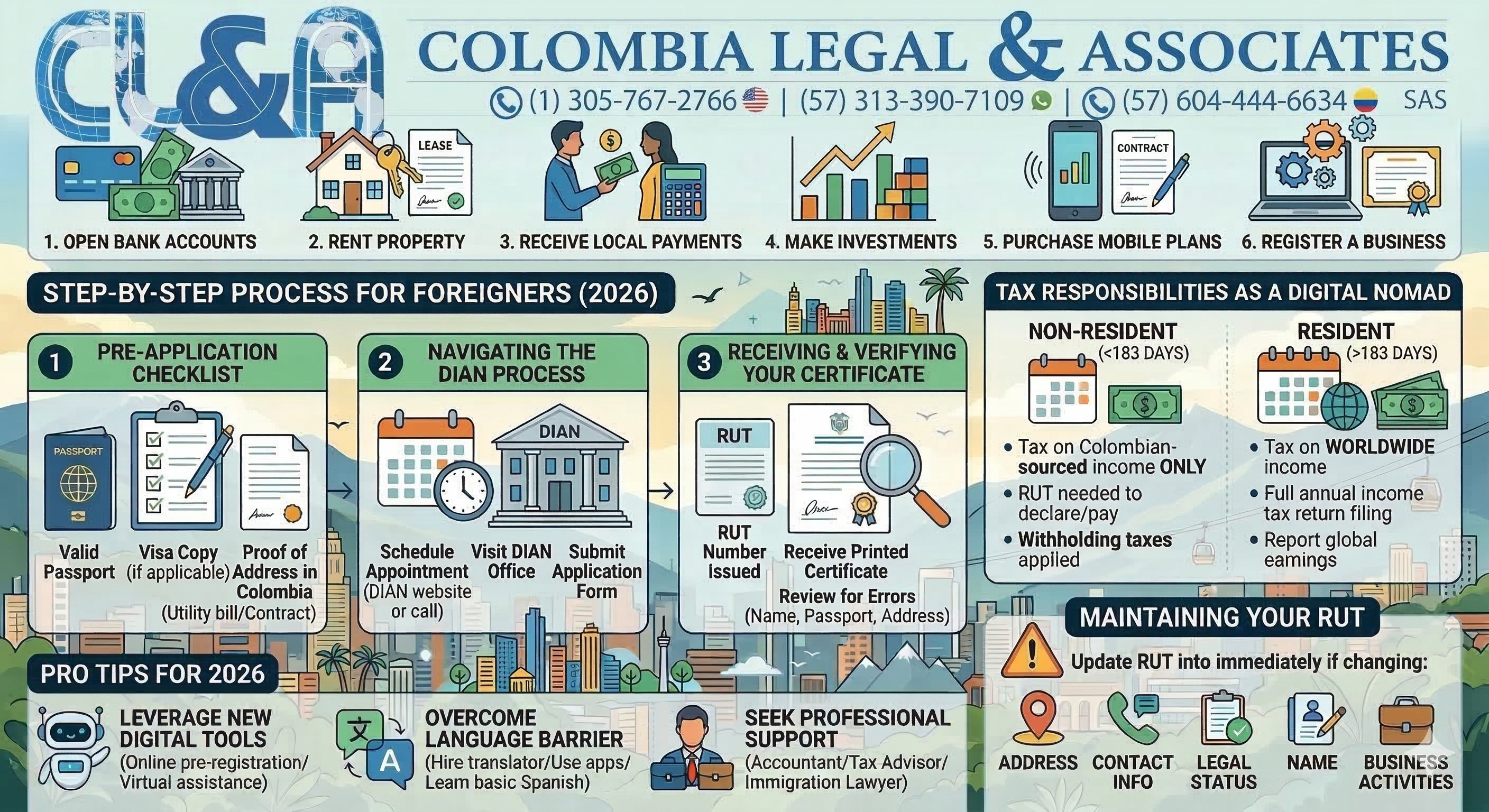
The Step-by-Step Guide to Obtaining Your RUT as a Foreigner (2026)
Obtaining your RUT in Colombia is a manageable process if you are well-prepared. While the DIAN’s procedures can sometimes seem complex, understanding the steps involved will greatly simplify the experience. Here’s a breakdown for 2026.
Pre-Application Checklist: Essential Documents You’ll Need
Before you even consider visiting the DIAN, ensure you have all the necessary documentation. This preparatory step is crucial to avoid delays and multiple trips. The typical requirements for foreigners include:
- Valid Passport: Your primary identification document. Ensure it is not expired.
- Visa (if applicable): If you are entering Colombia on a specific visa (like the digital nomad visa), bring a copy of your visa stamp or approval. Even if on a tourist stamp, you will need to present your passport.
- Proof of Address in Colombia: This can be a utility bill (electricity, water, internet) in your name, a rental contract, or a letter from your landlord confirming your address. If you are in temporary accommodation, you might need a notarized letter from the property owner stating you reside there.
- Completed RUT Application Form: This form can usually be downloaded from the DIAN website or obtained at a DIAN office. Fill it out accurately.
- Personal Identification Number: For foreigners, this is typically your passport number.
It’s advisable to check the official DIAN website for any updated document requirements closer to your application date, as regulations can change.


Navigating the DIAN Process: Appointment and Submission
Historically, obtaining a RUT involved an in-person visit to a DIAN office. While online options are expanding, an in-person appointment might still be the most straightforward process for foreigners.
- Schedule an Appointment: In many major cities, you may need to schedule an appointment with the DIAN. This can often be done online through the DIAN portal or by calling their customer service. Be aware that appointment availability can vary.
- Visit the DIAN Office: Arrive at your scheduled appointment with all your required documents. Be prepared for potential wait times.
- Submit Your Application: A DIAN official will review your documents and application form. They will input your information into the system.
- Receive Your RUT Number: If your application is approved, you will be issued your RUT number on the spot or a confirmation that it has been generated. The physical RUT certificate will be printed and provided to you.
Receiving and Verifying Your RUT Certificate
Once your RUT is processed, you will receive a printed certificate. It’s vital to review this document carefully for any errors in your personal information, passport number, or address. Any discrepancies should be reported immediately to the DIAN for correction. The RUT certificate is your official proof of registration and should be kept in a safe place. You will likely need it for future interactions with financial institutions, government agencies, and for any significant transactions.
Alternative Application Methods (Considering 2026 Developments)
The DIAN is continuously working to digitalize its services. By 2026, it is highly probable that more aspects of the RUT application process will be available online, potentially even for foreigners. Keep an eye on the official DIAN website for updates on:
- Online Pre-registration: Some processes may allow for initial online registration, reducing the time spent at a physical office.
- Digital Signatures: The use of digital signatures for certain applications might become more prevalent.
- Virtual Assistance: DIAN may offer enhanced virtual assistance or chatbots to guide users through the application.
It is always best to check the DIAN’s official website (www.dian.gov.co) for the most current information on application procedures, document requirements, and any new digital tools available for 2026.
Beyond Acquisition: Utilizing and Maintaining Your RUT
Obtaining your RUT is a significant milestone, but its true value lies in how it facilitates your life and enables various activities in Colombia. From daily financial dealings to significant investment opportunities, the RUT is your key.
Financial Operations: Banking and Digital Payments
One of the most immediate benefits of having a RUT is the ease of opening a bank account. Most Colombian financial institutions, including major banks like Bancolombia, Davivienda, and BBVA, require a RUT to open a savings or checking account. This allows you to receive payments securely, manage your money efficiently, and avoid high transaction costs associated with international money transfers for everyday expenses. Furthermore, a RUT can be beneficial for setting up local payment gateways or using certain digital financial services within the country.
Renting Property and Accessing Services
As mentioned, a RUT is often a prerequisite for signing rental agreements for apartments or houses, especially for stays extending beyond a few months. This allows you to secure more stable and comfortable living arrangements. Beyond housing, having a RUT can sometimes facilitate easier access to other services, such as setting up utility contracts (electricity, water, internet) without needing a local guarantor or facing additional complexities. It legitimizes your presence and your intent to engage in longer-term activities within Colombia.
Investing in Colombia: Real Estate and Securities
For digital nomads with aspirations beyond temporary stays, the RUT is indispensable for investment. If you are considering purchasing Real Estate in Colombia, the RUT is a mandatory requirement for the legal registration of property in your name. Similarly, if you plan to invest in the Colombian stock market or other financial instruments, the RUT is needed to open brokerage accounts and execute transactions. This enables you to diversify your assets and potentially benefit from Colombia’s growing economy. The process for registering foreign investment with the Central Bank of Colombia also requires this tax identification.
When to Update Your RUT Information
Your RUT is a dynamic document, and it’s crucial to keep its information current with the DIAN. You must update your RUT if:
- You Change Your Address: If you move to a new city or even a new neighborhood within the same city, inform the DIAN.
- Your Contact Information Changes: This includes your phone number or email address.
- Your Legal Status Changes: If your visa status changes, or you gain residency, this should be updated.
- Your Name Changes: Due to marriage or legal processes.
- You Open or Close Business Activities: If your professional activities shift significantly.
Failure to update your RUT can lead to complications, penalties, and difficulties in future transactions. The process for updating is similar to the initial application, often requiring a visit to a DIAN office with supporting documentation.
RUT and Your Tax Obligations as a Digital Nomad in Colombia
Understanding your tax obligations is a critical component of responsible living and working in any country, and Colombia is no exception. The RUT plays a central role in how you interact with the nation’s tax system.
Understanding Income Tax for Foreigners
Your tax obligations in Colombia depend significantly on your tax residency status.
- Non-Residents: If you spend less than 183 days in Colombia within a 365-day term and are not considered a tax resident, you are typically only liable for income tax on income sourced within Colombia. This might include freelance services provided to Colombian clients, rental income from Colombian property, or any other economic activity conducted within the country. The RUT is necessary to declare and pay these Colombian-sourced earnings.
- Residents: If you meet the 183-day rule or are otherwise deemed a tax resident, you are liable for taxes on your worldwide income. This means your foreign-earned income, including remote work salaries from overseas companies, rental income from properties outside Colombia, and any other global earnings, becomes subject to Colombian income tax. The RUT is essential for filing your annual income tax return, reporting all your global income, and calculating your tax liabilities. The term of your residency dictates the scope of taxation.
Other Potential Taxes for Digital Nomads
While income tax is the primary concern, digital nomads might encounter other taxes depending on their activities:
- Value Added Tax (VAT) – IVA: If you purchase goods or services in Colombia, you will pay VAT. If you are providing services to Colombian clients, you may also need to charge and remit VAT, which requires having a RUT.
- Withholding Taxes: Colombian entities paying you for services may be required to withhold a portion of your payment as tax, which is remitted to the DIAN on your behalf. This often requires you to provide your RUT.
- Property Taxes: If you own Real Estate in Colombia, you will be subject to annual property taxes.
The specific costs and requirements for these taxes can vary, and it is crucial to stay informed.
The Importance of Professional Tax and Legal Support
Navigating the complexities of tax laws in a foreign country can be challenging. For digital nomads, especially those dealing with international income and varying residency statuses, seeking professional advice is highly recommended. A Colombian accountant or tax advisor can help you:
- Determine your exact tax residency status.
- Understand your specific income tax liabilities.
- Ensure compliance with all filing requirements.
- Advise on potential tax deductions or benefits.
- Assist with the process of obtaining and maintaining your RUT.
Professional legal support can also be invaluable for understanding visa requirements, contract law, and investment regulations, ensuring your entire experience in Colombia is legally sound and financially secure.
Common Challenges and Troubleshooting for Digital Nomads
While Colombia offers a fantastic environment for digital nomads, encountering administrative hurdles is part of the experience. Being prepared for common challenges can make the journey smoother.
Overcoming Language Barriers
Spanish is the official language of Colombia, and while many people in tourist areas and larger cities speak some English, official interactions, especially with institutions like the DIAN, are conducted in Spanish. The primary challenge for many digital nomads is communicating effectively during the application process for the RUT and understanding tax documentation.
- Solution: Consider hiring a translator for critical appointments, using translation apps diligently, or enrolling in basic Spanish courses before or during your stay. Having a friend or colleague who is fluent in Spanish can also be incredibly beneficial.
Navigating Bureaucracy
Colombian bureaucracy can sometimes be perceived as slow or intricate. The process of obtaining documents, scheduling appointments, and understanding regulations requires patience and persistence. The DIAN, while modernizing, can still present challenges.
- Solution: Start the RUT application process well in advance of needing it. Be organized with your documents, polite and clear in your communication, and patient. Leverage online resources and contact the DIAN’s official channels for clarification.
Documentation Discrepancies and Errors
Mistakes on forms, incorrect information, or missing documents are common reasons for delays or rejections in any bureaucratic process. For foreigners, ensuring all international documents are correctly presented and understood within the Colombian system can be particularly tricky.
- Solution: Double-check every document for accuracy before submission. Ensure your passport details, address, and any visa information are precisely as they appear on official documents. If errors are found on your RUT, address them with the DIAN promptly.
Staying Updated on 2026 Regulatory Changes
Immigration laws, tax regulations, and administrative procedures can evolve. What was true in 2024 or 2025 might see adjustments by 2026. Staying informed about potential changes is crucial for maintaining compliance.
- Solution: Regularly check the official websites of Colombian government entities such as DIAN and Migración Colombia. Follow reputable Colombian news sources and consult with immigration lawyers or tax advisors who specialize in the digital nomad space.
By anticipating these potential challenges and adopting proactive solutions, you can significantly enhance your experience and navigate the administrative aspects of living and working in Colombia with greater ease and confidence throughout your term of stay.
Conclusion: Embracing Legal Compliance for a Seamless Colombian Digital Nomad Experience
The “Registro Único Tributario” (RUT) is far more than just another piece of paperwork; it is the foundational tax identification number that unlocks a more integrated and less complicated life for foreigners in Colombia. For digital nomads, understanding its importance, knowing the requirements, and proactively obtaining it are essential steps towards a truly seamless experience in this dynamic country. From facilitating essential financial operations and securing comfortable living arrangements to enabling significant investment opportunities in Real Estate and beyond, the RUT acts as your official key.
As you plan your adventures for 2026 and beyond, remember that compliance with local tax laws and administrative procedures is not an obstacle but an enabler. It allows you to fully immerse yourself in the Colombian culture, contribute positively to its economy, and enjoy the incredible lifestyle this country offers without the constant worry of administrative oversight. By navigating the process of obtaining your RUT with diligence and seeking professional guidance when needed, you empower yourself to focus on your work, explore the vibrant landscapes, and truly make Colombia your temporary or long-term home. Embrace the RUT as an integral part of your digital nomad journey in Colombia, and open the door to a richer, more compliant, and fulfilling experience.

What Clients Say About Colombia Legal & Associates
⭐️⭐️⭐️⭐️⭐️ 4.7 out of 5.0 based on Google reviews for Colombia Legal & Associates S.A.S.
Public feedback from clients who worked with our legal team on Colombian visa and related legal matters.
Reviews are sourced from publicly available third-party platforms. Individual results may vary.
“I worked with the Medellín team and had an excellent experience. Once I was connected with Isabela, I felt confident I was on the right path to obtaining my visa.”
— Mathew Sickler
“The team helped significantly with my visa process, and everything went much smoother than expected.”
— Mohan Chander Narasimman
“This is the company to use for visa services. My experience was excellent and well organized.”
— Benjamin
“Professional and responsive. They provided clear guidance and helped me understand the process from start to finish.”
— Robert Nepon
“Very professional service. Everything was clearly explained, which helped me avoid delays.”
— Reynaldo Araujo
“Clear communication and realistic expectations. Helpful for someone unfamiliar with Colombian legal procedures.”
— Justin Halladay
Important Legal Disclaimer
The information provided on this website is for general informational purposes only and does not constitute legal advice, immigration advice, tax advice, or a guarantee of any specific outcome.
Colombian laws, visa requirements, administrative criteria, government fees, and procedures change frequently and may be updated without notice. Information published on this site may become outdated or incomplete over time.
Reading or using this website does not create an attorney–client relationship with Colombia Legal & Associates S.A.S., MedellinLawyer.com, or any member of our team.
We strongly recommend consulting directly with qualified legal or accounting professionals regarding your specific immigration, tax, or compliance needs before taking action.

Passport Renewal

Colombian Child Custody
Colombian Marriage